Teaching primary pupils about AI: what Sheffield's new research means for school leaders
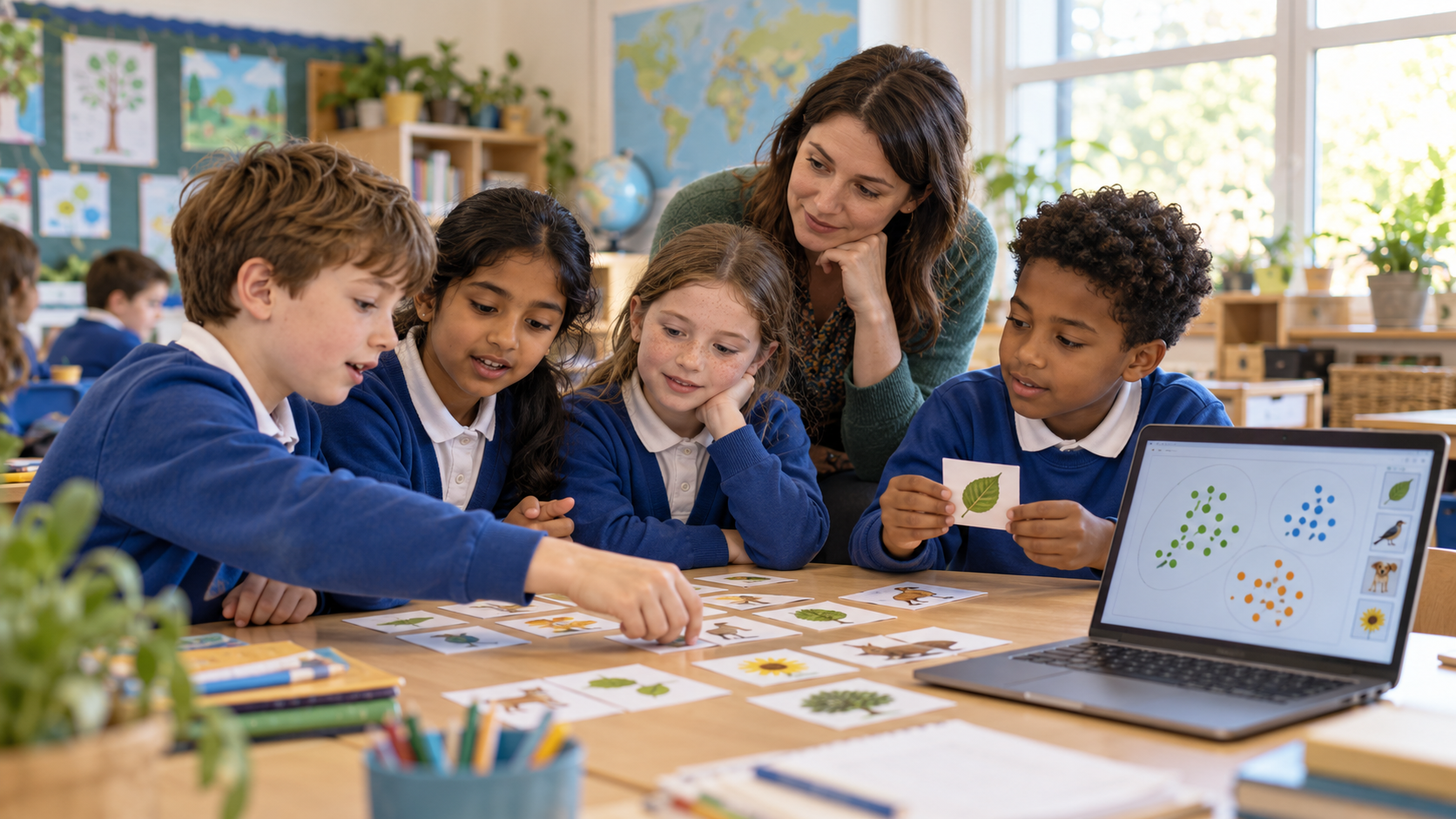
A year-long study in eight Sheffield primary schools offers a ready-made AI-literacy sequence for Years 2 to 6, and a sobering picture of how many young children are already using chatbots at home.
A year-long practitioner study in eight Sheffield primary schools offers a ready-made AI-literacy sequence for Years 2 to 6, and a sobering picture of how many young children are already using chatbots at home.
Learn Sheffield and its Computing & Digital Innovation Centre have published Teaching about AI in Primary Schools, a report on a collaborative research project carried out during 2025/26. It is one of the first structured attempts in England to answer a question many primary leaders are quietly asking: what should we actually be teaching young children about artificial intelligence, and how do we do it safely?
For school leaders, the report is useful on two levels. It offers a tested lesson sequence and progression framework, and it provides local evidence about pupils' use of AI that should prompt every primary school to look again at its online safety and parental engagement work.
What the project did
Nine schools were recruited and eight completed the full project. Teachers, most of them computing subject leaders, taught a purpose-designed sequence of two AI-literacy lessons per year group from Year 2 to Year 6, across roughly 70 classes. Participants met as a community of practice throughout the year, reviewed the lessons together and collected evidence through pupil and staff surveys, pupil voice interviews and school case studies.
What the lessons cover
Each pair of lessons combines how AI works, how it is used and its risks, pitched at an age-appropriate level:
- Year 2, AI Around Us: how programs spot patterns to recognise images, what smart speakers can and cannot answer, and some simple rules.
- Year 3, How to Train a Computer: an introduction to machine learning using an interactive tool, and why reliable data matters.
- Year 4, Creating Images with AI: revisiting how computers identify images, then generative AI and why people create images for positive and negative reasons.
- Year 5, What is Artificial Intelligence?: bias and data quality, how chatbots generate text, and ethical questions about misinformation, environmental impact and social companions.
- Year 6, What is Generative AI?: large language models and image generators, with discussion of misinformation, jobs and bias.
Year 1 was left out deliberately, on the basis that time is better spent on foundational computing knowledge, although the report suggests simple conversations with younger children, such as whether a computer can be a friend or whether a picture is real. A fuller six-lesson Year 5 unit, using Scratch face sensing or the micro:bit, is also available but was not taught as part of this study.
Alongside the lessons sit teacher video guides, a sequence of activities for pupils with SEND working below age-related expectations, an RSHE and AI-literacy appendix, phase-by-phase learning outcomes and an illustrated glossary.
Importantly for leaders weighing up safeguarding, the sequence does not depend on pupils using chatbots. It relies on unplugged activities, class discussion and age-appropriate tools such as Google's Quick, Draw! and Code.org's AI for Oceans. Teaching about AI is not the same as giving pupils access to AI.
What the children told researchers
The most striking finding concerns use at home. Around two-thirds (68%) of the pupils who took part in the pupil voice activities, from Year 2 to Year 6, were using AI chatbots by summer 2026, and 30% of those users said they sometimes did so without an adult present. Most were using a parent's device with permission. In one school, the proportion using a chatbot rose from 22% in December to 74% by June, including half of the Year 2 pupils interviewed.
Pupils' understanding also shifted. Before the lessons, 58% of the pupils interviewed drew or described AI as a robot; afterwards, the figure was 35%. After teaching, the risk pupils mentioned most often was AI getting things wrong, while the proportion describing AI as evil or likely to take over the world fell from 19% to 6%. Almost all interviewed pupils (96%) enjoyed the lessons and wanted to learn more.
One Year 2 pupil captured the challenge for schools neatly: "Why do we have to go to school if we have AI?"
Teacher confidence is the real constraint
A survey of 38 teachers across five schools gave an average confidence rating of 3.36 out of 5 for talking to pupils about AI. Nearly a quarter had never heard of machine learning and half had never heard the term "large language model". Of the 15 respondents who had taught the lessons, 87% said they felt more confident as a result; the remainder reported no change. The teacher video guides were singled out by every project lead as making the difference.
The report is also candid that some staff had reservations about whether AI should be taught to primary children at all. Those concerns needed to be addressed through professional development before lessons could be delivered well.
The report does provide is credible, practitioner-led evidence that a short, well-resourced sequence is feasible in ordinary primary schools, and that children's use of these tools is running well ahead of their understanding.
Why this matters now
The Curriculum and Assessment Review recommended that pupils learn about AI, and the government has committed to a reformed computing curriculum that includes AI literacy, aiming for implementation from September 2028. That leaves a gap of at least two years in which schools are working from non-statutory guidance, while Keeping Children Safe in Education 2026 already references generative AI and deepfake content. Meanwhile, the tools are reaching children regardless.
Possible next steps:
- Put policy first. The report recommends having an AI policy in place, or in development, before teaching about AI, so that staff know which tools may and may not be used with pupils and pupils know what acceptable use looks like.
- Compare before you adopt. Review the two-lesson sequence against what you already teach in computing and online safety, and against other free resources such as Barefoot's AI Explorers units. A simple Year 1/2, Year 3/4 and Year 5/6 progression may suit many schools.
- Trial it with a baseline. Start with teacher-led activities and gather pupils' own explanations of AI before and after teaching. Asking children to draw or describe "what AI looks like" is a quick way to see whether misconceptions are shifting.
- Build staff knowledge first. A short briefing on the difference between machine learning and generative AI, and what a large language model is, will make lessons more accurate and staff more willing to teach them.
- Use RSHE and online safety to revisit key messages. Two lessons a year will not embed understanding on their own. The RSHE appendix and SEND sequence give natural opportunities to return to ideas such as whether a computer can be a friend, or how to spot fake content.
- Talk to parents. If children are mostly using parents' devices with permission, parental understanding matters as much as pupils'. A short information session that pairs practical uses with risks may draw more families in than a warnings-only approach.
- Mind your language. The report advises against describing AI in human terms. Saying "the AI program can help us" rather than "AI thinks" is a small change that supports more accurate mental models.
- Check the safeguards. Before using any external activity, check age restrictions, whether pupil accounts are needed, image permissions and data processing arrangements, and complete a data protection impact assessment where required.
Access and cost
The report itself is free to read. The learning outcomes, RSHE appendix and glossary are free to use with attribution. The full lesson sequence is free to Sheffield schools and available as a paid resource elsewhere, and schools can request access by contacting the Computing & Digital Innovation Centre. Learn Sheffield is also recruiting primary, secondary and special schools for its 2026/27 research programme, at £350 per project.
Resources
Get more like this
One practical idea, one resource, one piece of tech, weekly.